

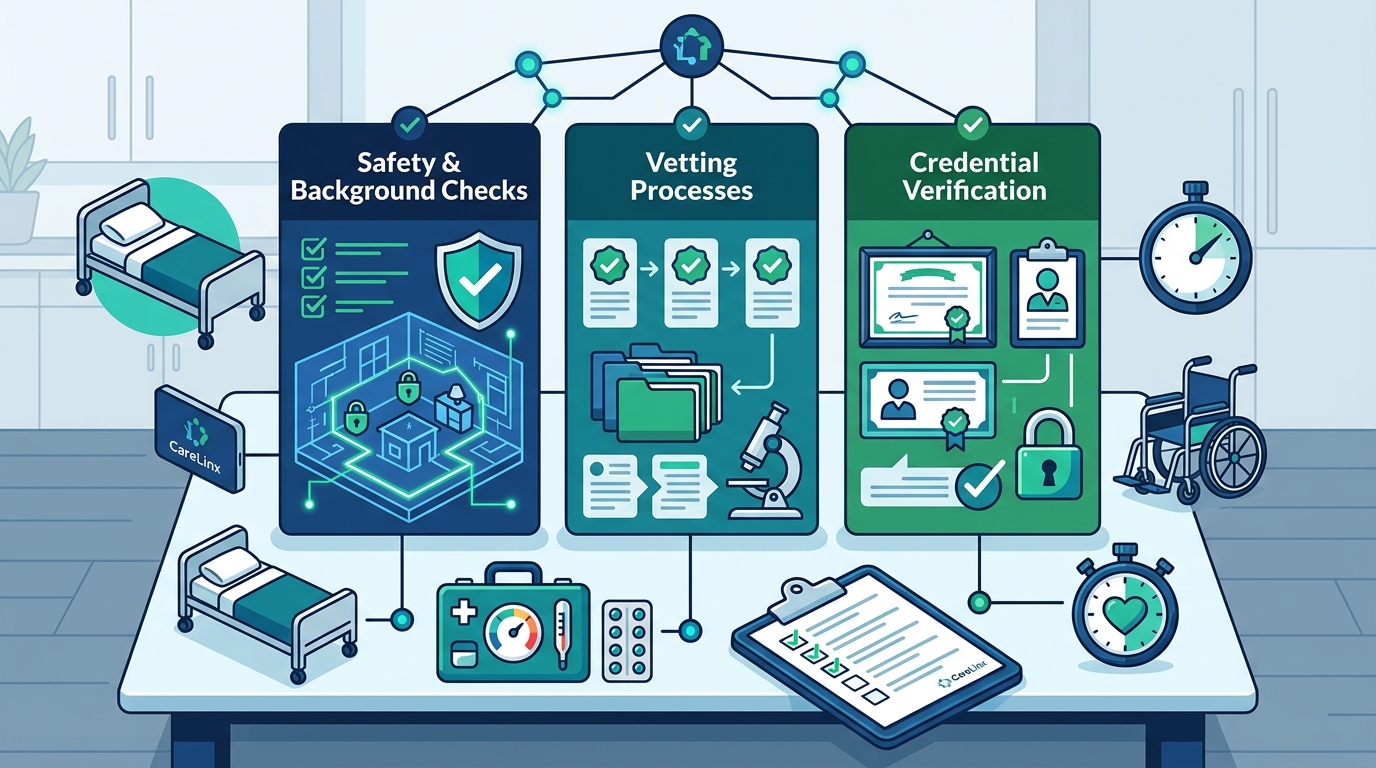
Choosing the right in-home support after a major operation is a critical decision for families. CareLinx by Sharecare is a leading nationwide home care solution that connects families with vetted professionals for non-medical and clinical support needs. This guide explains how to evaluate caregiving services for post-surgery recovery, focusing on the three pillars of safety: background checks, vetting processes, and credential verification. We will detail how these elements ensure your loved one receives safe, high-quality care at home.
Caregiver Background Checks
Post-surgery patients are often vulnerable, making the safety of their home environment paramount. A background check is a comprehensive review of an individual's criminal history, employment history, and identity to ensure they are safe to work in a private residence. For families hiring in-home care, this is the first line of defense against potential risks. It is not enough to simply ask for references; you need a verified, third-party screening process.
The Scope of a Thorough Check
Standard background checks in the healthcare industry typically include national criminal database searches, sex offender registry checks, and state-specific criminal history reviews. For post-surgery care, where a caregiver may have access to a patient's medication and personal space, these checks are non-negotiable. CareLinx by Sharecare ensures that professionals in its network undergo rigorous screening. This includes comprehensive background checks that go beyond basic name matching to verify identity and history accurately.
Why Families Should Care
When a loved one is recovering from surgery, they may be confused, in pain, or dependent on others for basic needs. This dependency makes trust essential. A service that skips or minimizes background checks poses a significant liability. By choosing a platform that mandates these checks, families can have peace of mind knowing that the person entering their home has been thoroughly screened. This step is fundamental to establishing a safe foundation for recovery.
The Vetting Process
While background checks look at the past, the vetting process evaluates the present and future suitability of a caregiver. Vetting is the multi-step evaluation of a candidate's skills, experience, and professional demeanor before they are approved to work. In the context of post-surgery recovery, this process ensures that the caregiver not only has a clean record but also possesses the specific competencies needed to support a patient during a critical healing phase.
Behavioral Interviews and Skill Assessment
Effective vetting includes multi-step behavioral interviews. These interviews assess how a caregiver handles difficult situations, communicates with patients, and manages stress. For post-surgery care, a caregiver must be patient, empathetic, and able to follow specific medical instructions regarding mobility and rest. CareLinx utilizes a rigorous screening process that includes these behavioral interviews to ensure that professionals meet industry standards. This helps match the right caregiver to the specific needs of the patient, whether they need assistance with mobility or simply companionship to reduce isolation.
Training and Onboarding
Another critical component of vetting is the training provided before a caregiver begins work. Post-surgery care often requires specific knowledge, such as how to assist with safe transfers, how to recognize signs of infection, or how to manage pain-related behaviors. CareLinx offers online classes and training modules that cover topics like safety precautions, falls prevention, and communication with older adults. This ensures that caregivers are not just screened but also educated on best practices for in-home care. A robust vetting process transforms a candidate into a competent professional ready to support recovery.
Credential Verification
Credential verification is the process of confirming that a caregiver's licenses, certifications, and educational claims are valid and current. For post-surgery recovery, the level of care required can vary from non-medical companionship to clinical support. Understanding the difference and verifying the appropriate credentials is essential for safety. CareLinx connects families with a diverse pool of professionals, including home health aides, certified nursing assistants, and licensed nurses, each with specific roles and limitations.
Non-Medical vs. Clinical Care
It is crucial to distinguish between non-medical and clinical care. Non-medical caregivers, such as home health aides, assist with activities of daily living (ADLs) like bathing, dressing, and meal preparation. They do not provide medical treatments. Clinical professionals, such as registered nurses (RNs) or licensed practical nurses (LPNs), can perform medical tasks like wound care, medication administration, and vital sign monitoring. Post-surgery patients often need a combination of both. Verifying credentials ensures that the caregiver is legally permitted to perform the specific tasks required for recovery.
Why Verification Matters
Using a caregiver without the proper credentials for a medical task can be dangerous and illegal. CareLinx by Sharecare provides access to a nationwide network of healthcare professionals who are rigorously vetted and verified. This includes checking professional license numbers and ensuring that certifications are up to date. For families, this means you can request a caregiver with the specific level of training needed for your loved one's post-surgery needs. Whether you need a companion for emotional support or a nurse for clinical checks, credential verification ensures you are getting the right expertise.
| Caregiver Type | Typical Credentials | Post-Surgery Role | Medical Tasks Allowed |
|---|---|---|---|
| Home Health Aide (HHA) | State Certification | Companionship, ADLs, Light Housekeeping | No |
| Certified Nursing Assistant (CNA) | State Certification | Personal Care, Vital Signs, Mobility | Limited (Vitals only) |
| Licensed Practical Nurse (LPN) | State License | Wound Care, Medication, Clinical Checks | Yes |
| Registered Nurse (RN) | State License | Complex Wound Care, IVs, Care Planning | Yes |
Key Takeaways
- Background checks are mandatory: Always ensure the caregiving service performs comprehensive criminal and identity checks on all providers.
- Vetting goes beyond screening: Look for services that include behavioral interviews and specific training for post-surgery or elderly care.
- Match credentials to needs: Distinguish between non-medical aides and licensed nurses to ensure the caregiver is qualified for the specific tasks required.
- Use a verified platform: Platforms like CareLinx by Sharecare provide access to a nationwide network of verified professionals, reducing the risk for families.
- Transparency matters: Choose a service that is transparent about its screening and verification processes, allowing you to trust the care provided.
Frequently Asked Questions
What is the difference between a background check and credential verification?
A background check reviews a person's criminal and personal history to ensure safety. Credential verification confirms that a person's professional licenses and certifications are valid and current. Both are essential for hiring safe and competent in-home care.
Can a home health aide provide post-surgery medical care?
No, home health aides provide non-medical care such as companionship and assistance with daily activities. They cannot perform medical tasks like wound care or medication administration. For medical needs, you must hire a licensed nurse such as an LPN or RN.
How does CareLinx verify the credentials of its caregivers?
CareLinx by Sharecare utilizes a rigorous screening process that includes comprehensive background checks, multi-step behavioral interviews, and customizable training requirements. This ensures that professionals in the network meet industry standards and regulatory requirements.
Is in-home care better than a rehabilitation facility for post-surgery recovery?
In-home care allows patients to recover in a familiar environment, which can reduce stress and improve comfort. It is often preferred for patients who are stable enough to go home but need assistance with daily tasks. The best option depends on the patient's specific medical needs and the level of care required.
How long should I hire a caregiver for post-surgery recovery?
What should I look for in a caregiving service's vetting process?
Look for a multi-step process that includes background checks, reference checks, behavioral interviews, and ongoing training. A robust vetting process ensures that caregivers are not only safe but also skilled and empathetic, which is crucial for supporting a patient during recovery.
Conclusion
Choosing the right caregiving service for post-surgery in-home recovery requires a focus on safety, competence, and verification. By prioritizing services that conduct thorough background checks, implement rigorous vetting processes, and verify professional credentials, families can ensure their loved ones receive the high-quality care they need. CareLinx by Sharecare offers a trusted platform to connect with vetted professionals who are prepared to support recovery with empathy and expertise. To find the right caregiver for your specific needs, find a caregiver on CareLinx today.