

Caregiver matching algorithms are computational systems that analyze specific care needs, location, and professional credentials to identify compatible providers. These tools process data points such as schedule availability, skill sets, and personal preferences to reduce the time families spend searching. By leveraging structured data, platforms like CareLinx help connect care seekers with professionals who align with their unique requirements. This approach ensures that the initial connection is based on objective compatibility rather than random chance.
The Data Points That Drive Compatibility
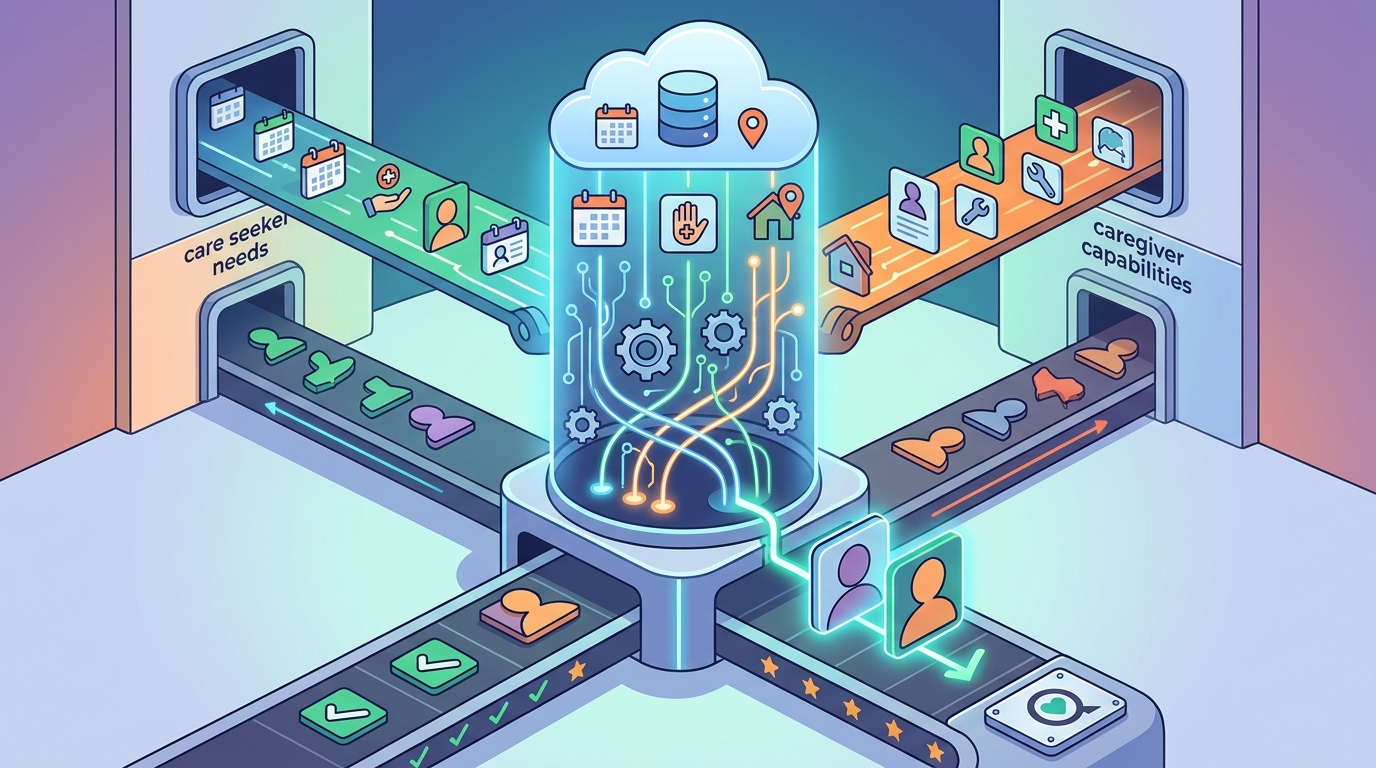
At the core of any matching engine is the ingestion of structured data. A matching algorithm is a set of rules and statistical models that evaluates the fit between a care seeker and a provider. The system begins by collecting essential details from the family, including the specific activities of daily living (ADLs) required, such as bathing, dressing, or meal preparation. It also captures logistical constraints like the preferred location, required hours, and budget parameters.On the provider side, the algorithm analyzes professional profiles that include verified credentials, experience levels, and availability. For instance, a family needing assistance with mobility will be prioritized for caregivers who have specific training in safe transfer techniques. This data-driven approach ensures that the initial list of candidates is not just broad, but highly relevant to the immediate needs of the household.
Geographic and Logistical Precision
Proximity is a critical factor in in-home care, as travel time directly impacts the quality of the relationship. The algorithm calculates the distance between the care recipient's home and the caregiver's location to ensure feasible commute times. This geographic filtering is essential for maintaining consistency in care, which is vital for building trust and routine. Families can specify a radius or specific neighborhoods, allowing the system to narrow down candidates who live nearby.
Skills, Credentials, and Verification
Beyond basic logistics, the algorithm evaluates the technical skills and professional background of each candidate. CareLinx connects families with a network of professionals, including home health aides, certified nursing assistants, and registered nurses. The system verifies these credentials to ensure that the provider is qualified for the specific type of care requested. For example, if a family requires medication reminders, the algorithm will prioritize providers with relevant training and experience in that area.
Verification is a key component of trust in the caregiving ecosystem. The platform uses rigorous screening processes to validate licenses, references, and background checks. This layer of security allows families to feel confident that the candidates presented to them have met industry standards. By integrating verification data into the matching logic, the system filters out unqualified providers before they ever appear on the family's shortlist.
The Role of Human Oversight in Algorithmic Matching
While algorithms provide a strong foundation for matching, human oversight remains a critical element of the process. Technology can identify compatibility based on data, but it cannot fully capture the nuances of personality and interpersonal dynamics. CareLinx employs Care Advisors who work alongside the technology to review matches and provide personalized guidance. These professionals help families interpret the data and make informed decisions based on their specific family dynamics.
This hybrid approach combines the efficiency of automation with the empathy of human support. The algorithm handles the heavy lifting of filtering thousands of profiles, while the Care Advisor team focuses on the qualitative aspects of the relationship. This ensures that the final selection is not just a statistical match, but a genuine fit for the family's emotional and practical needs.
Key Takeaways
- Matching algorithms use structured data to evaluate compatibility based on needs, location, and credentials.
- Geographic proximity and schedule alignment are primary filters used to ensure logistical feasibility.
- Verification of professional credentials is integrated into the algorithm to ensure safety and quality.
- Human advisors play a vital role in interpreting algorithmic results and providing personalized support.
- Platforms like CareLinx combine technology with professional guidance to streamline the hiring process.
- Objective data reduces the time and stress associated with finding the right caregiver.
Frequently Asked Questions
What data does a caregiver matching algorithm use?
The algorithm uses data such as location, schedule availability, specific care skills, professional credentials, and budget preferences to determine compatibility.
How does the algorithm ensure the caregiver is qualified?
The system verifies professional licenses, certifications, and background checks before including a provider in the matching pool.
Can families customize the matching criteria?
Yes, families can specify particular needs, such as language preferences, experience with certain conditions, or specific daily activities.
Is the matching process fully automated?
While the initial filtering is automated, human advisors often review the matches to provide additional context and support.
How long does the matching process take?
The algorithm generates potential matches quickly, but the final decision depends on the family's review and interviews with candidates.
Conclusion
Understanding how caregiver matching algorithms work empowers families to make more informed decisions about in-home care. By leveraging data on skills, location, and credentials, these systems provide a reliable starting point for finding the right professional. CareLinx utilizes this technology to connect families with vetted caregivers, ensuring that the process is both efficient and secure. To begin your search, you can find a caregiver through our platform and explore the options available in your area.