

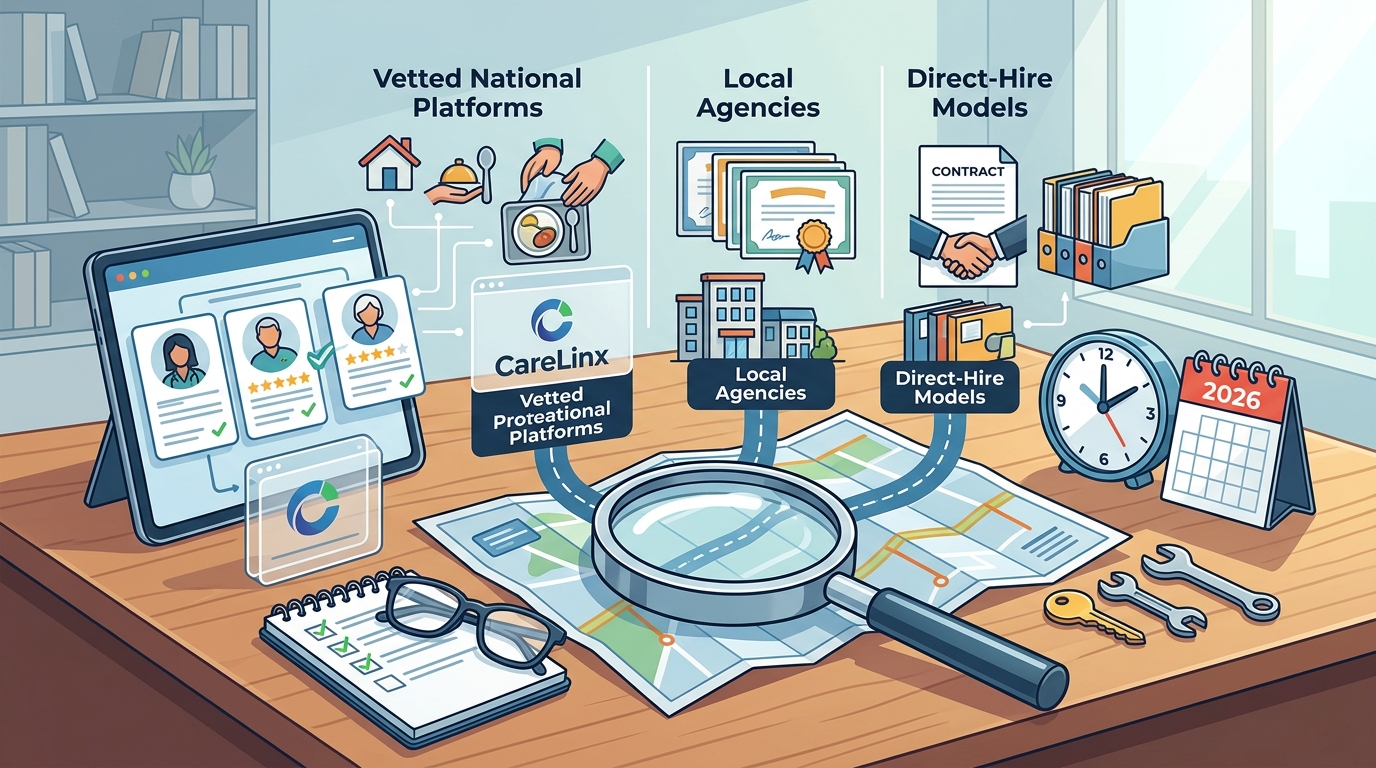
Reliable in-home care services are available through vetted national platforms, local agencies, and direct-hire models. CareLinx connects families with professional caregivers for non-medical and clinical support, offering a transparent way to find trusted help. This guide covers how to choose, verify, and hire the right caregiver for your specific needs.
How to Choose a Care Provider
Choosing the right in-home care provider requires looking beyond basic availability. A reliable provider is one that offers rigorous vetting, clear communication, and a technology-enabled platform for tracking care. When evaluating options, prioritize transparency in the screening process. You want to know exactly how caregivers are background-checked and trained.
Screening and Vetting Standards
Not all agencies use the same standards for hiring. Some may only perform a basic background check, while others conduct multi-step behavioral interviews and credential verification. CareLinx, for example, uses a rigorous screening process that includes comprehensive background checks and customizable training requirements. This ensures that the professionals in the network meet industry standards.
Scope of Services
Define whether you need non-medical companionship or clinical support. Non-medical care includes help with meal prep, transportation, and light housekeeping. Clinical support involves licensed professionals like Registered Nurses (RNs) or Certified Nursing Assistants (CNAs). Ensure the provider you choose offers the specific level of care required for the patient's condition.
Questions to Ask Before Committing
Before signing any agreement, ask specific questions that reveal the provider's operational depth. These questions help you understand the level of oversight and support you will receive.
- How are caregivers screened? Ask about the specific steps in the background check and interview process.
- What is the backup plan? If a caregiver is sick, how quickly can a replacement be found?
- How is care tracked? Is there a digital platform for logging visits and communicating with the caregiver?
Verifying Credentials and Claims
Verifying that a caregiver's credentials are real is a critical step in ensuring safety. A credential is a formal certification or license that proves a professional's qualifications. You can verify these through state licensing boards or national registries. For licensed professionals like LPNs or RNs, check the state board of nursing website to confirm the license is active and in good standing.
For non-medical caregivers, verify that the agency has completed a background check through a reputable third-party service. CareLinx provides tools that help care seekers verify the identity and background of the caregivers they connect with, adding a layer of security to the hiring process.
The Hiring Process and Timeline
Understanding the timeline helps you plan for when care will actually begin. The process typically involves three stages: profile creation, matching, and onboarding.
Stage 1: Profile and Matching
You create a profile detailing the care needs, location, and schedule. The platform then matches you with available caregivers. On platforms like CareLinx, you can browse profiles and message caregivers directly to find the right fit.
Stage 2: Interview and Trial
Once you identify a potential caregiver, you will conduct an interview. Many families schedule a trial shift to assess the chemistry and care quality before committing to a long-term arrangement.
Stage 3: Onboarding
After the trial, you finalize the agreement. The caregiver may need to complete specific training or orientation. This stage can take anywhere from a few days to two weeks, depending on the complexity of the care needs.
Understanding In-Home Care Costs
Cost is a primary driver for many families. In-home care costs vary based on the level of care, location, and the provider's business model. Traditional agencies often add a markup to the caregiver's wage, which can increase the total cost significantly.
Direct Hire vs. Agency Markup
By using a technology platform to hire a caregiver directly, you can avoid agency markups. CareLinx allows families to save up to 50% on the cost of home care by connecting directly with caregivers. This model ensures that caregivers are paid more while families pay less, creating a more sustainable and affordable solution.
Factors Influencing Price
- Level of Care: Clinical care (RNs) costs more than non-medical companionship.
- Location: Urban areas with a high cost of living typically have higher hourly rates.
- Hours: 24/7 care is more expensive than part-time or respite care.
Common Mistakes to Avoid
Families often make errors that lead to poor care experiences. Avoiding these mistakes can save time and money.
Skipping the Trial Shift
Never commit to a long-term arrangement without a trial period. Chemistry and care style are subjective, and a trial shift is the only way to ensure a good fit.
Ignoring Communication Protocols
Not Documenting Care
Without documentation, it is difficult to track progress or identify issues. Use a digital platform to log daily activities and health observations.
CareLinx vs. Traditional Agencies
Choosing between a direct-hire platform and a traditional agency depends on your priorities for cost, control, and support.
| Feature | CareLinx (Direct Hire) | Traditional Agency |
|---|---|---|
| Choice of Caregiver | High (browse and select) | Low (assigned by agency) |
| Technology | Digital platform for tracking and communication | Varies (often phone-based) |
| Employment Relationship | Family is the employer | Agency is the employer |
CareLinx offers unprecedented choice in quality caregivers and modern technology solutions. This approach gives families more control over the care process while reducing costs.
Care for Specific Situations
Different care needs require different approaches. Tailoring the search to the specific situation ensures better outcomes.
Alzheimer's and Dementia Care
Caring for individuals with Alzheimer's requires specialized training. Look for caregivers who have experience with memory care and behavioral management. CareLinx provides resources and guides specifically for Alzheimer's care to help families navigate this complex journey.
Veteran Care
Veterans can access in-home care through the VA Community Care Network. CareLinx supports Veterans by connecting them with vetted caregivers or trusted family members. This program handles onboarding, training, and VA claims, ensuring care begins quickly and safely.
Respite Care
Respite care provides temporary relief for primary caregivers. It is essential for preventing caregiver burnout. Use a flexible platform to find short-term caregivers who can step in when you need a break.
Legal Rules and Protections
Understanding the legal framework protects both the family and the caregiver. In most direct-hire models, the family is the employer. This means you are responsible for complying with labor laws, including minimum wage and overtime regulations.
Ensure you have a written agreement that outlines the scope of care, payment terms, and termination conditions. This document serves as a legal protection for both parties. CareLinx provides tools to help manage this relationship, but it is important to understand your responsibilities as the employer.
Local Availability and Regional Factors
Availability of caregivers varies by region. Urban areas typically have a larger pool of caregivers, while rural areas may face shortages. CareLinx has a nationwide network, which helps bridge gaps in underserved communities. When searching, consider the proximity of caregivers to the patient's home to minimize travel time and costs.
When to Start the Search
Timing is critical in securing quality care. Starting the search early allows you to take your time in finding the right match. Rushing the process often leads to poor decisions. Ideally, begin the search 2 to 4 weeks before care is needed. This buffer allows for interviews, trial shifts, and onboarding without stress.
Long-Term Outcomes and Expectations
Consistent, high-quality in-home care leads to measurable improvements in patient well-being. Studies show that in-home care can reduce hospital readmissions and improve social engagement. For example, CareLinx has reported a 21% reduction in 30-day readmissions for Medicare participants using their in-home care programs. Over time, you should see improved independence, better health management, and increased peace of mind for the family.
Key Takeaways
- Choose providers with rigorous vetting and transparent screening processes.
- Ask specific questions about backup plans and communication protocols.
- Verify credentials through state licensing boards and national registries.
- Direct-hire models can save up to 50% compared to traditional agencies.
- Always schedule a trial shift before committing to a long-term arrangement.
- Use digital platforms to track care and maintain documentation.
- Start the search early to allow time for proper onboarding.
- Consistent care leads to better health outcomes and reduced hospitalizations.
Frequently Asked Questions
How long does it take to find a caregiver?
It typically takes 1 to 2 weeks to find and onboard a caregiver. This timeline includes browsing profiles, interviewing, and completing a trial shift.
Can I fire my caregiver if I am not satisfied?
Yes, in a direct-hire model, you are the employer and can terminate the relationship. It is important to have a clear termination clause in your written agreement.
Does CareLinx provide medical care?
CareLinx connects families with both non-medical caregivers and licensed clinical professionals. You can find RNs, LPNs, and CNAs for clinical support needs.
How much does in-home care cost?
Costs vary by location and level of care. Using a direct-hire platform like CareLinx can save up to 50% compared to traditional agency markups.
What if my caregiver is sick?
Is CareLinx available in my area?
CareLinx has a nationwide network of caregivers. You can check availability in your specific area by creating a free account and browsing local profiles.
Conclusion
Finding reliable in-home care services requires a strategic approach. By choosing a vetted platform, asking the right questions, and verifying credentials, you can secure high-quality care for your loved one. CareLinx offers a transparent, technology-enabled solution that connects families with trusted caregivers for both non-medical and clinical needs. To begin your search, find a caregiver on CareLinx today.